

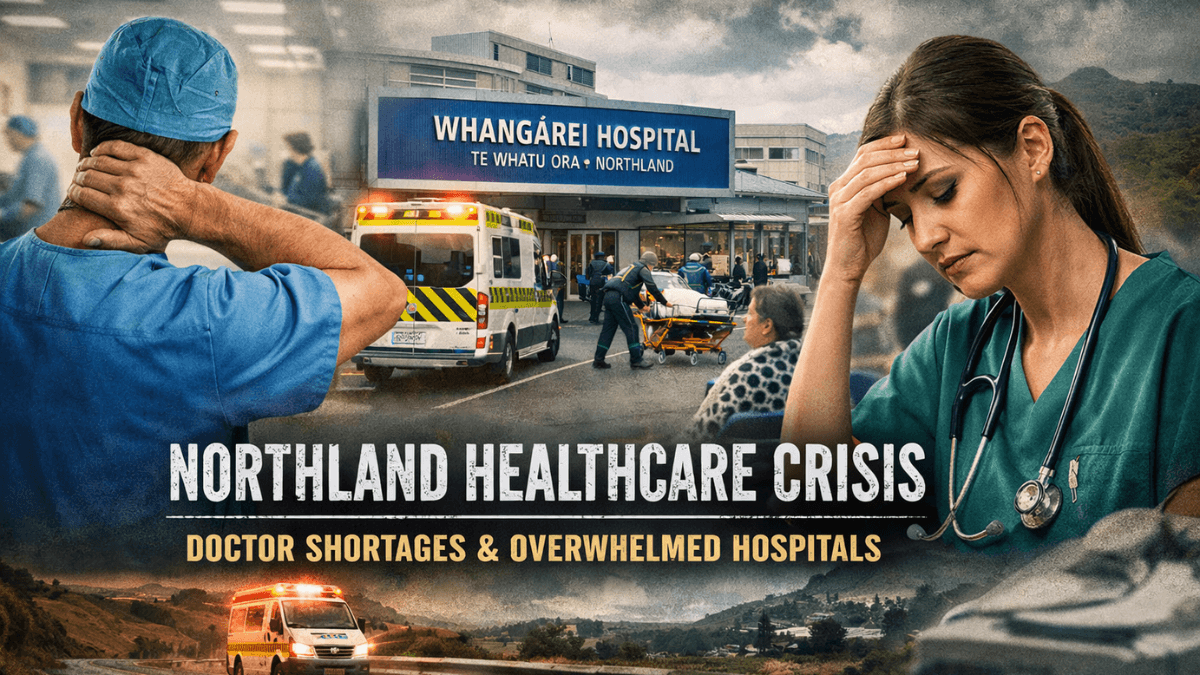
Doctor Shortages and Strain on Northland’s Health System
Waiting for Care, How Shortages Are Impacting Patients in Northland
Northland’s health system is facing mounting pressure, with doctor shortages, rising patient demand, and overworked staff combining to create one of the most strained healthcare environments in New Zealand. At the center of this crisis is Whangarei Hospital, the region’s primary hospital, which is increasingly being asked to carry the burden of care for a widely dispersed and underserved population.
Whangarei Hospital has become the backbone of healthcare delivery in Northland. As smaller rural hospitals struggle to maintain consistent doctor coverage, patients are frequently transferred to Whangarei for treatment, This has led to significant overcrowding, particularly in the emergency department which has reportedly operated far beyond its intended capacity.
The hospital is no longer just serving its local community it is effectively functioning as the safety net for the entire region. As a result, patients often face long wait times, and staff are required to manage a constant influx of cases, many of which could have been treated locally if adequate doctor staffing were available elsewhere.
Widespread Doctor Shortages, The pressure on Whangarei Hospital is closely tied to a broader shortage of doctors across Northland, In some areas, up to a third of senior doctor roles remain unfilled, Rural hospitals such as those in Dargaville and the Bay of Islands have been particularly affected, at times operating without an on-site doctor overnight.
In these situations, care is often delivered via telehealth or by nurses working without direct physician support, While these measures help maintain basic services, they are not a substitute for fully staffed facilities. Consequently, patients who require more comprehensive care are redirected to Whangarei, further increasing demand on an already stretched system.
Staff at Breaking Point, Healthcare workers across the region are under intense pressure, Long hours, frequent overtime, and chronic understaffing have become the norm, Many doctors and nurses report working well beyond standard hours, often covering additional shifts to fill gaps in staffing.
This sustained workload has led to widespread burnout and declining morale, Staff are not only responsible for clinical duties but are sometimes required to take on administrative or support roles due to staffing shortages, Such conditions raise concerns about both the wellbeing of healthcare workers and the safety of patients.
My Personal Experience, For many people in Northland, these pressures are not just statistics, they are lived experiences, In my own case, I faced waiting times of up to two months just to secure a routine doctor’s appointment, delays like this make it difficult to address health concerns early, often prolonging anxiety and in some cases, allowing conditions to worsen.
Ultimately, the situation led me to change to another medical service in the hope of receiving more timely care. While this provided a personal solution, it also highlights a broader issue, ACCESS TO PRIMARY HEALTHCARE is becoming increasingly inconsistent, and patients are often left to navigate these challenges on their own.
A Strained System with Real Consequences, The impact of these pressures extends beyond hospital walls, Patients in rural areas are often required to travel long distances to access care, sometimes waiting hours for treatment or transport. Ambulance services are also under strain, as they are frequently tasked with transferring patients to Whangārei from across the region.
Clinicians have raised concerns about the risks associated with these conditions, including delays in treatment and increased potential for medical errors, In some cases, the system has been described as operating under “high risk” conditions, with staff warning that patient safety could be compromised if pressures continue to escalate.
The Structural And Challenges, Northland’s challenges are not new, but they are becoming more acute. The region’s large rural population, combined with difficulties in recruiting and retaining medical professionals, has created a persistent gap between supply and demand. Population growth is further intensifying this imbalance, placing additional strain on an already stretched workforce.
Addressing Northland’s healthcare crisis will require more than short-term fixes, Long-term solutions will need to focus on workforce development, improved retention of medical staff, and better support for rural healthcare services, Without meaningful change, the pressure on hospitals like Whangarei is unlikely to ease.
For now, The reality is clear, Northland’s health system is under significant strain, and both patients and healthcare workers are feeling the effects.